This is where bileşens become recipes. Build the logic -- koşullu dallanma, hata yönetimi, veri dönüşümü, and iş kuralları -- that turns a basic sync into a derin entegrasyon. One codebase serves hundreds of customers.
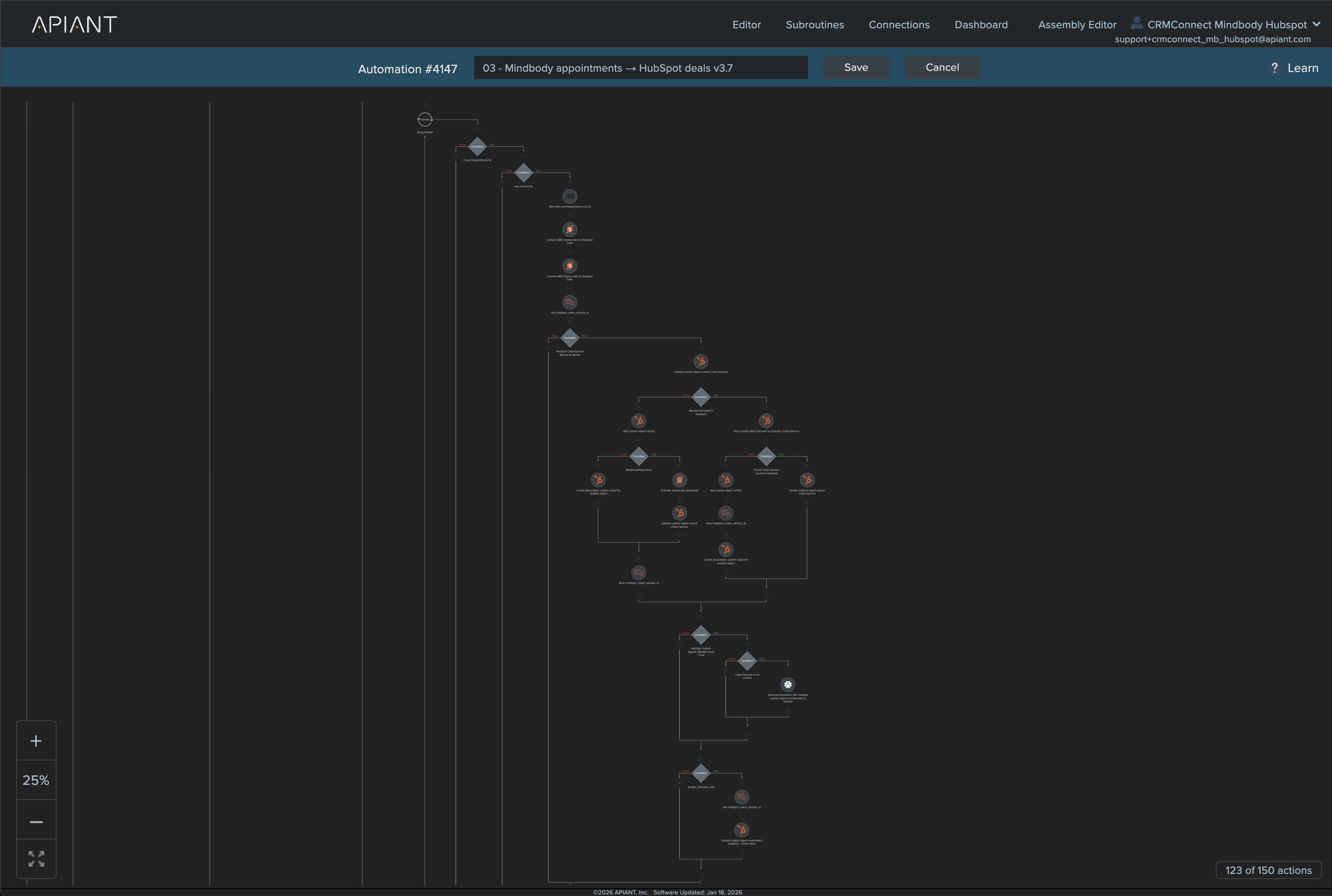
Each otomasyon does one thing well: when a class booking comes in, process it. When a membership renews, handle it. When a client service depletes to one session remaining, trigger the replenishment campaign.
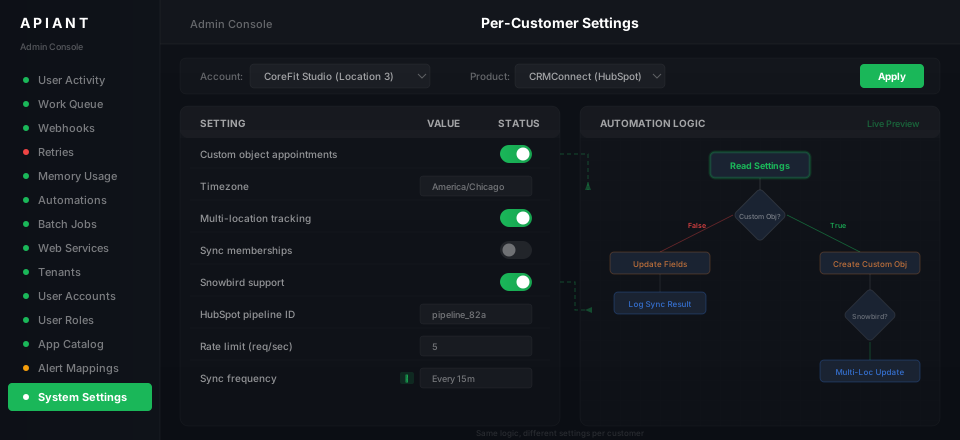
Every otomasyon separates core logic from yapılandırma. One codebase serves hundreds of customers with different time zones, settings, and iş kuralları. Deploy once, upgrade everyone simultaneously.
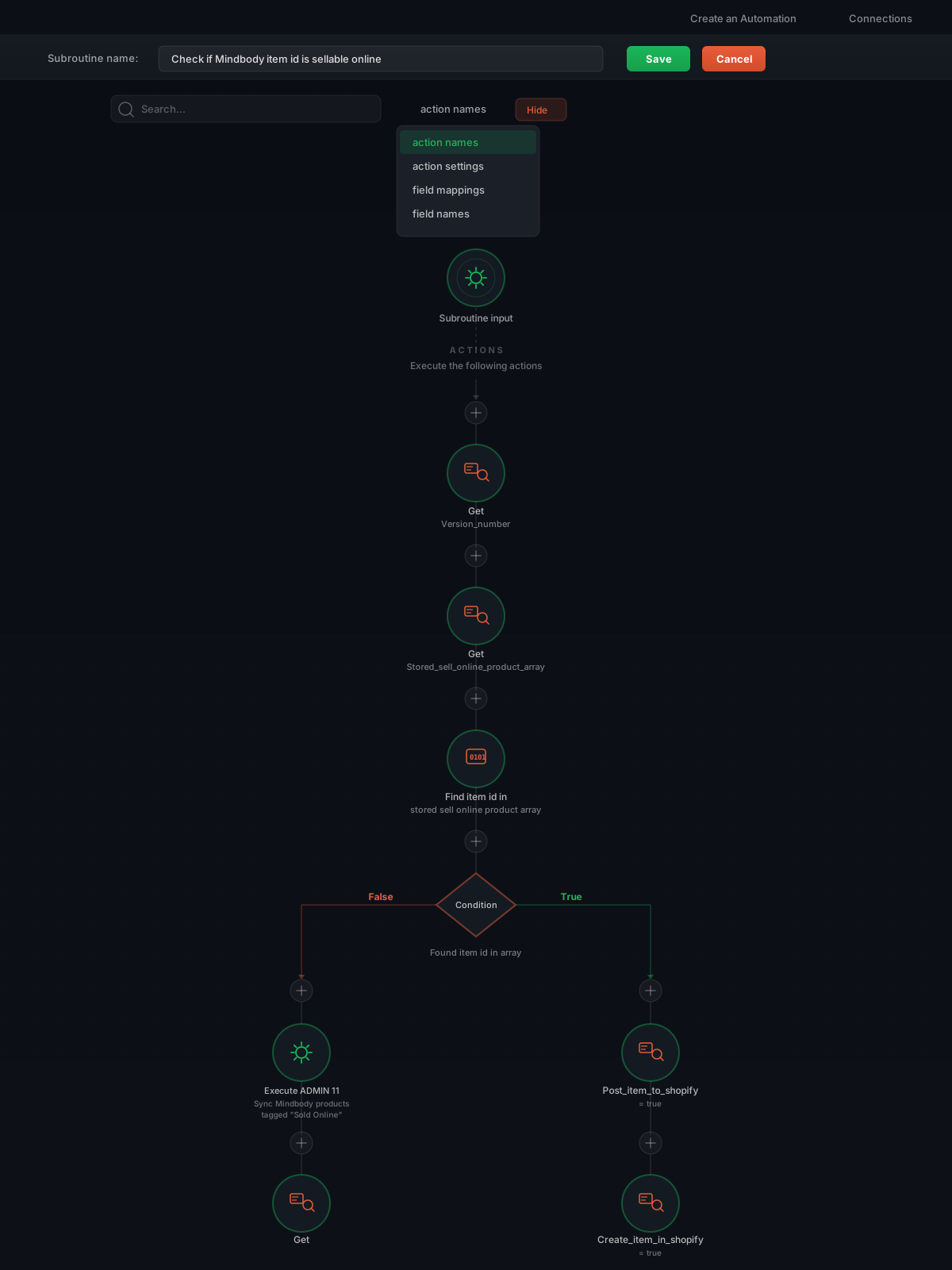
No code, but full depth. The entire MindBody-to-CRM entegrasyon with özel nesneler, hız sınırlama, and çoklu konum routing is built visually. Every step is visible, inspectable, and testable.
Branch based on settings: "Does this customer use özel nesneler? Branch left for yes, right for no." "Does this franchise track snowbird customers across locations? If yes, update the çoklu konum dropdown."
Rate limiting, yeniden deneme mantığı, and hata yönetimi are built into the platform. When an API returns a 429, the platform backs off otomatik olarak. When a step fails, it retries with exponential backoff before alerting.
Search any piece of data -- a client ID, a booking number, an email address -- and anında see every step it passed through, every transformation, every API response. No log diving. No guesswork.
Tüm bağlı hesaplara aynı anda dağıtın. Bir yükseltme yaptığınızda, her müşteri bunu aynı anda alır - manuel dağıtım yok, sürüm kayması yok, kaçırılan konumlar yok.
The secret to productized entegrasyons is separating what is universal from what is unique. The logic -- how veri akışıs between APIs, how errors are handled, how objects are mapped -- that is the same for everyone. The settings -- which fields to sync, which features to enable, time zones, languages, logos -- that is different for every customer.
The otomasyon logic is the same across all dağıtıms. It defines how veri akışıs, how errors are handled, and how objects are mapped between systems.
Each dağıtım gets its own settings layer. Customize per customer without touching the logic. Settings surface directly in FormApps for end-user yapılandırma.
Every otomasyon runs on APIANT's unified veri motoru. Format-agnostic processing. XPath everywhere. Scale without limits. Large API responses, complex nested structures, thousands of records per sync -- the engine handles it natively.
Most entegrasyon platformus choke on nested JSON, paginated responses, or high-volume syncs. APIANT's veri motoru normalizes every format (JSON, XML, CSV, custom) into a single model and transforms without manual parsing.
XPath ifadeleri her yerde çalışır ve size her adımda veri seçimi, filtreleme ve dönüştürme üzerinde hassas kontrol sağlar.
Bileşens from the Assembly Editor become recipes here. The Yönetim Konsolu deploys those recipes to hundreds of customers at once.
See the Otomasyon Düzenleyicisi in action or explore the full platform.
