
We Gave an AI a Support Ticket. It Rebuilt the Integration and Closed the Loop.
How Claude Code and APIANT turned a messy multi-payment sync bug into a verified fix, with a human only signing off at the very end.

How Claude Code and APIANT turned a messy multi-payment sync bug into a verified fix, with a human only signing off at the very end.
This one comes from CRMConnect, APIANT’s turnkey integration that keeps Mindbody and HubSpot in sync. It handles the client data, the deduplication, and the field mapping so a marketing team can work off real activity instead of stale exports. The specific piece we are dealing with here is the part that turns Mindbody sales into HubSpot deals, so revenue lands in the CRM automatically, with the right amount attached to the right client.
A customer paid about $8,400 at the front desk. The deal in the CRM showed $400. Nothing had thrown an error, nothing looked broken, and most sales were syncing fine. This one just quietly lost most of its value somewhere between Mindbody and HubSpot.
Those are the worst kind of bugs: the ones hiding in the 2% of transactions that are a little unusual. We handed this one to an AI and let it drive the whole thing, from diagnosis to a tested fix to the customer reply. Here is how it went.
The ticket
A boutique fitness studio wrote in with a small, annoying mystery. Most of their sales flowed from Mindbody to HubSpot without a hitch. This one deal did not.
The culprit turned out to be sales paid in more than one way. Split a payment across a card and an account balance, and the old sync read from a report that did not include every tender. So the deal came through with a fraction of what the customer actually paid.
Why this is normally a slow, painful fix
A bug like this usually eats days of engineering time. Someone has to reconstruct how the integration works, figure out which of several sync paths is at fault, change the logic without breaking the paths that already work, then test it against a live system that is genuinely hard to poke at. Point of sale software does not exactly hand you a sandbox with a “make a weird split-payment sale” button.
So it tends to sit. The customer waits. The fix is risky. Everyone is a little nervous about touching a working integration.
We handed it to the AI instead

We gave the ticket to Claude Code running on APIANT and let it work. Not “suggest a code snippet.” Actually work: read the integration, understand it, change it, test it against the real Mindbody account, and report back. Here is what it did, without a human writing a line of code.
It found the real cause. It traced the problem to three separate issues hiding behind one symptom: the sync was reading from a report that dropped some payment types, multi-item sales were being counted incorrectly, and a couple of sales could collide on the same identifier.
It rebuilt the integration properly. Instead of a quick patch, it refactored the deal logic into one shared component used by both the instant sync (fires the moment a sale happens) and the nightly catch-up sync. Same logic, two triggers, no more drift between them. It moved both onto a richer data source that actually includes every payment, including account and membership balances.
It made it fast at scale. It added a cache so the nightly job does not re-run slow lookups over thousands of past sales. First pass builds the cache; every pass after that skips the expensive search.
It added the detail the customer wanted. Each deal now records the payment method used, so the studio can see at a glance how a sale was paid.
Then it tested on the real system
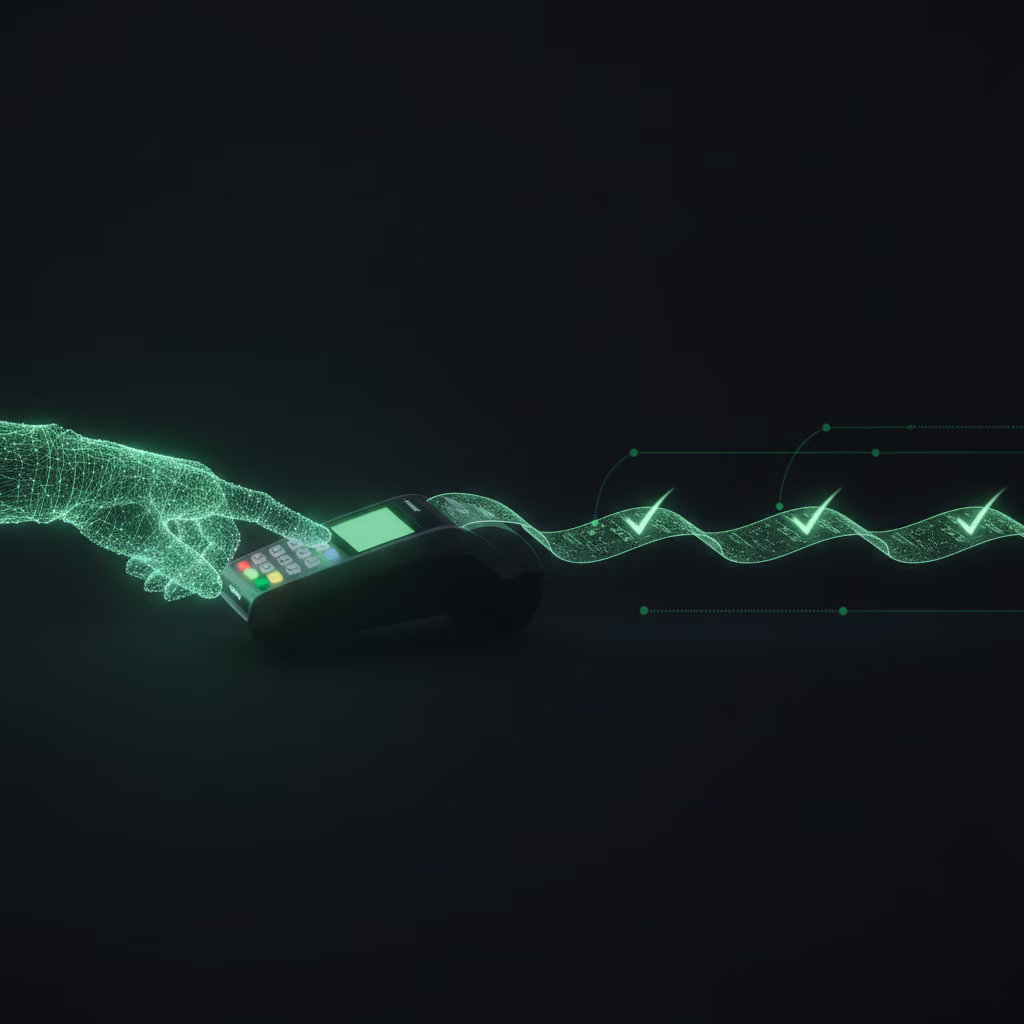
This is the part that still feels a little like science fiction.
The AI opened the actual Mindbody point of sale in a browser and rang up test sales itself. One item paid one way. One item split across two payments. Several items on one payment. Several items split across payments. A walk-in with no client record. It clicked through the register like a staff member would.
Then it watched each sale flow through the integration and read the results line by line. Did the right number of deals get created? Did the amounts add up to the sale total? Did the payment method show up? Did running the sync twice create duplicates, or did it correctly recognize it had already handled the sale?
Every branch checked out. The amounts matched. No duplicates. The payment methods landed.
It caught its own mistake
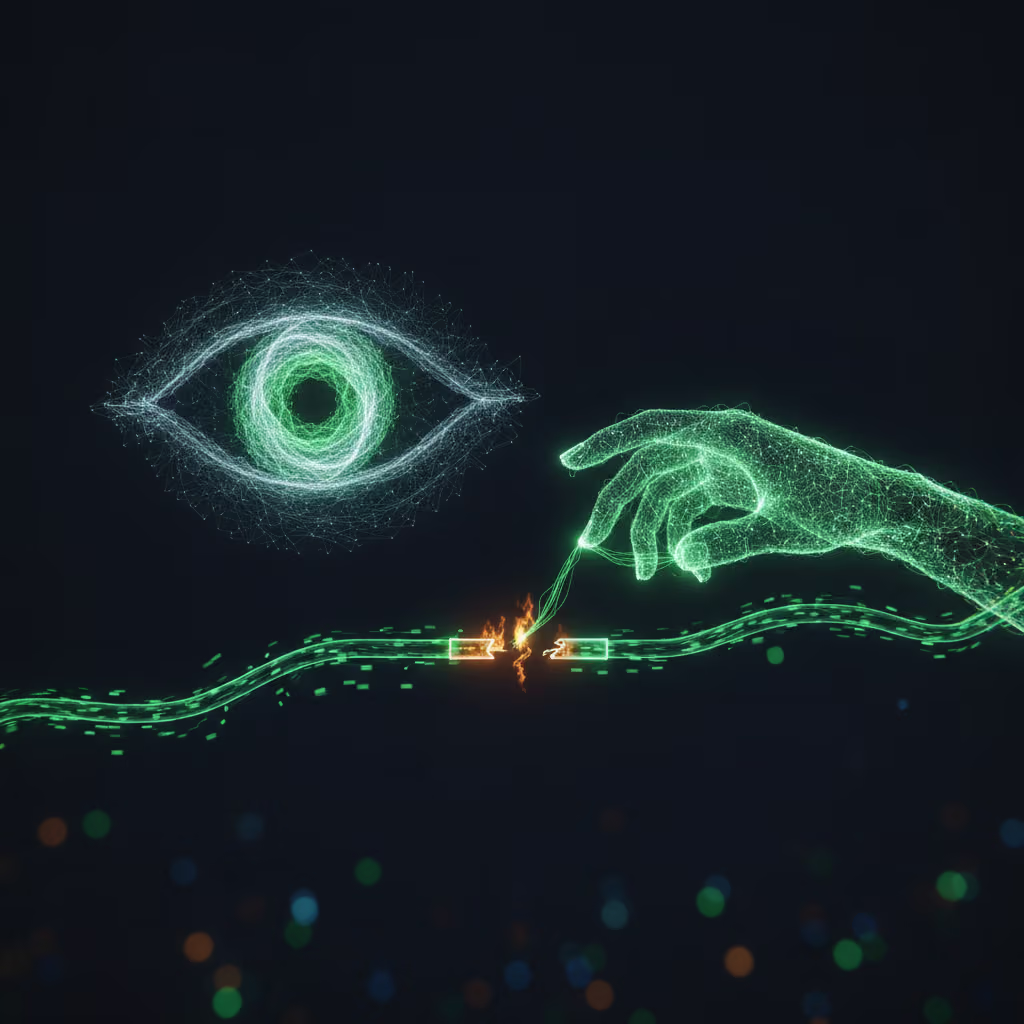
Partway through, one of its own changes introduced a small regression. A new field was not wired up correctly, and it quietly broke new deal creation.
The AI noticed, because it was reading the live execution data instead of assuming its work was correct. It found the exact cause, fixed the wiring, re-ran the real failing sale, and confirmed the fix produced the right result, documenting the whole thing along the way.
That is the difference between generating code and owning an outcome.
It closed the loop with the customer
When the fix was verified, the AI wrote the reply to the customer in plain language: what was happening, why the amount looked wrong, what changes now, and the reassurance that past sales would self-correct on the next sync. It staged that message on the ticket, ready to go.
A human read it, agreed, and sent it. A human also gave the final go to publish the change to production. That is on purpose. The AI does the heavy, precise, tireless work. People keep their hand on the two decisions that should always be human: what we say to a customer, and what goes live.
One fix, every customer
Here is the part that matters if you build integrations for a living. This was not a one-off script bolted onto a single account. The Mindbody to HubSpot sync is a productized API App: one integration, built and maintained in a single place, running across every customer who uses it. So when the AI rebuilt the deal logic, it did not just fix this one studio. It closed the same split-payment gap for everyone on that integration, and every new customer inherits the corrected version from day one.
That is the model system integrators keep asking for. Build a solution once, sell it many times, and improve it in one place. A fix like this raises the quality of the product for the entire install base at once, which is exactly what turns a productized integration into a real recurring-revenue asset instead of a pile of per-client custom work that only gets more fragile as it grows.
Why APIANT makes this possible
An AI can only operate what it can see and touch. Most integration platforms are a black box, so the AI is stuck writing suggestions from the outside.
APIANT is built the other way around. Every integration is made of parts the AI can actually inspect, edit, and run: the automations, the shared subroutines, the field mappings, the live execution history, the cached values. The AI can change one piece, run it, read exactly what happened at each step, and adjust. Pair that with browser control of the source system, and it can test against reality instead of guessing.
That combination is what let one messy real-world ticket turn into a full, verified refactor.
The takeaway
This was not a toy problem. It was a subtle, multi-cause bug in a live integration between two serious systems, the kind that normally means a nervous engineer and a slow week.
An AI took it end to end. It diagnosed the real cause, rebuilt the integration the right way, tested every path against the real point of sale, caught and fixed its own error, and drafted the customer response. People stepped in only to approve the message and the deploy.
That is where this is heading. Not AI that writes a bit of code for you, but AI that takes a hard, specific problem and drives it all the way to a working, tested solution on a platform built for exactly that. If you have integrations that are almost right, or bugs that only show up in the weird 2% of cases, this is what solving them is starting to look like.
Keep reading

The Feature We Avoided for Years, Built in Days
One request came back for years: let a shopper book against real availability at the moment they buy. We never built it. Then an AI operator on our AI-first platform did, in days.
The "Bug" That Wasn't: How AI Found the Needle in the Haystack and Cleared Our Integration in Minutes
A high-value customer was certain our integration had scrambled their data and asked us to switch it off. With AI wired into every layer of the platform, we traced one record's full history and proved the change came from an upstream third-party app, with evidence, in minutes.
AI-First Integration Engineering With Claude Code: A Real Debug Session
A real APIANT debugging session, with the actual prompts. Watch an AI read a sibling integration and four years of version history, and watch a builder's hunch stop a regression the codebase never recorded.