
Mindbody and Calendly: Route Referral Bookings Without Front Desk Cleanup
How CalendarConnect's dynamic event handling and enhanced client data management process every Calendly event type into clean Mindbody appointments.

A day spa uses Calendly to capture referral bookings. The spa offers 14 different services across three providers, and each service has its own length, price, room, and provider. You cannot reasonably ask the referral source, often another local business, to pick the right provider, room, and duration on your behalf.
So today the spa runs one generic Calendly link called “Referral Booking,” and the front desk re-routes every single one by hand. That defeats the entire point of having online booking.
Your referral partners have a stake in this too. A local physician’s office that sends patients to your spa wants the handoff to feel seamless: the patient clicks, books, and shows up. When the patient gets rebooked into a different slot because your front desk had to fix the appointment, the physician’s office hears about it. Enough rough handoffs and they simply stop referring.
What the Manual Cleanup Costs You
Re-routing every referral booking by hand is not just slow, it is fragile. The front desk has to interpret a generic booking, figure out the right service and provider, find a real opening, and re-enter it, all while the original confirmation the patient received is now wrong. Every step is a chance to make a mistake the patient will notice.
There is also an availability problem hiding underneath. A single generic booking link has to show times that could work for any of your 14 services. That lowest-common-denominator availability is wrong for most of them. You cannot fit a 30-minute facial into a slot only your 90-minute massage providers have free. So generic setups either overbook specific providers or hide capacity you actually have. Either way, you lose bookings and the front desk pays for it in cleanup.
How It Works Instead
CalendarConnect reads the service the referral picked on the Calendly form and routes the resulting appointment to the correct service, provider, location, and duration in Mindbody automatically. It picks an available provider from the pool eligible for that service. And if you run different booking flows, referrals versus direct bookings versus package consultations, each one can route to its own logic.
Availability works correctly too. When the referral picks a service, the form shows the times that are genuinely bookable for that service, with an eligible provider, at that location, not a watered-down view. You expose your full capacity without overbooking anyone.
Rooms and equipment are respected. A laser treatment needs the laser room. A massage needs a massage room. Your Mindbody setup already knows which service needs which room, and CalendarConnect honors that, so the front desk never has to re-room a booking because the system tried to put a laser treatment in a manicure station.

What You Set Up
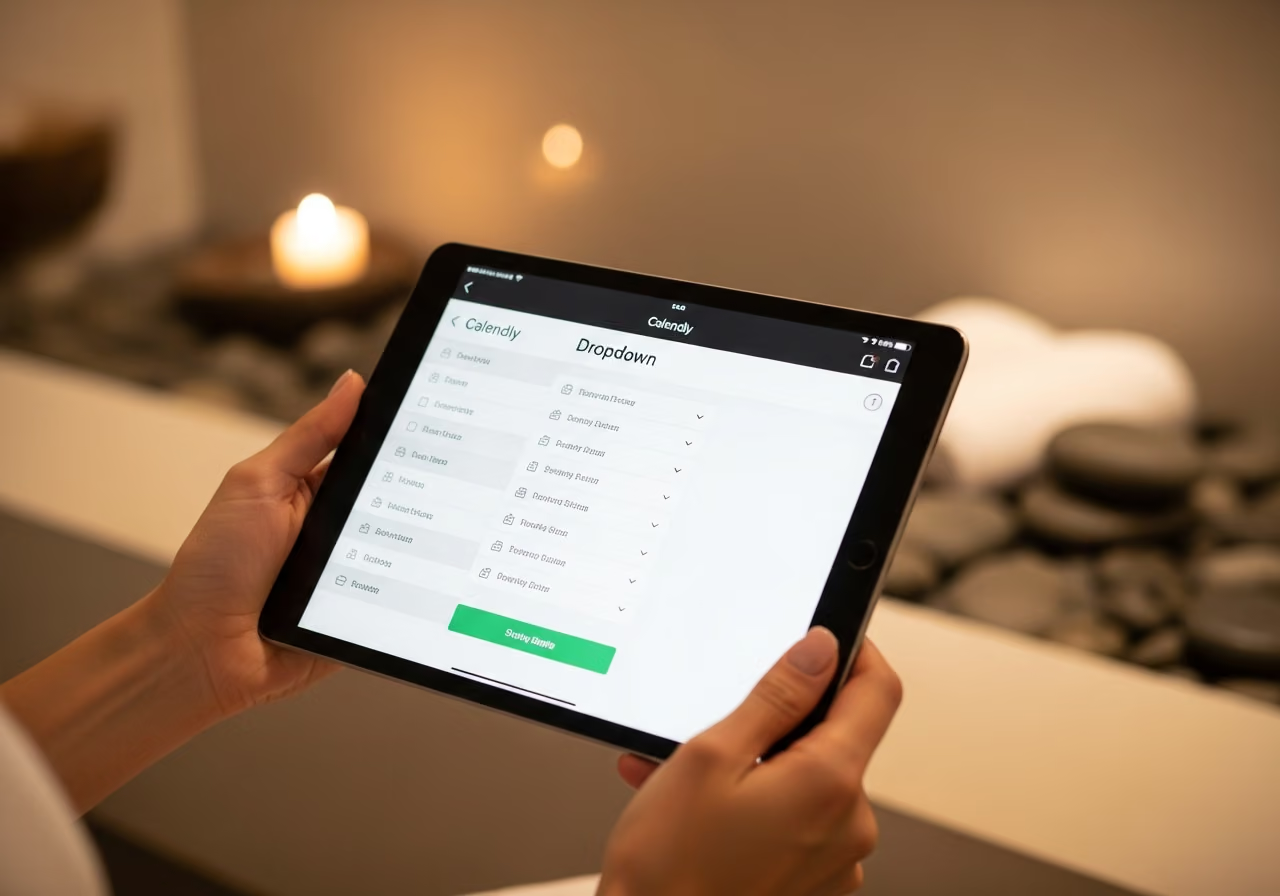
In plain terms, here is the whole arrangement. You keep one Calendly booking link with a simple service-picker dropdown listing your 14 services, and a location picker if you have more than one site. Behind the scenes, each option in that dropdown is matched once to its Mindbody service, provider pool, room, and duration.
After that, the work is invisible. A referral partner shares one link. The patient picks their service, sees real availability, and books. The appointment lands in Mindbody as the correct, fully-formed booking, with no front desk re-routing. Your team can keep a short reference sheet showing which dropdown option maps to which service, but they will rarely need it.
You also decide what happens in the rare case where the chosen service has no provider free at the requested time. The form can suggest the next opening, offer an alternate provider, or fall back to a general intake. You pick the behavior that fits your spa.
A Few Situations Worth Knowing
If a referral picks a service you no longer offer, an old package, for example, the old option can be mapped to its replacement service so historical referral links keep working while you retire the old option on your own schedule.
You also choose how providers get picked from the eligible pool: round-robin across the team, load-balanced by who is busiest, or senior providers first for new-client consultations. Whatever fits how you run the spa.
And a combo service, say a manicure paired with a pedicure, can be a single booking option that creates two back-to-back appointments with the right provider continuity and the right total duration.
What This Means for Your Spa
Take a hypothetical example. A single-location day spa with three providers and 14 services, running roughly 25 referral bookings a week. After putting this routing in place, front desk re-routing time drops from about three hours a week to zero. Referral conversion improves slightly, because referred clients book the right service the first time instead of being rebooked a day later.
The bigger effect is on your referral program itself. Referral partners are happier because their patients get a clean experience, so existing partners refer more often. And because a referred patient now reliably lands, books, shows up, and converts, the economics of referral marketing finally make sense, which means it becomes a channel worth investing in.
Want to see CalendarConnect Mindbody to Calendly in action? View the API App page.
Keep reading

The Gap Between "I Paid" and "I'm Booked"
A customer buys a class pack on Shopify, then can't figure out how to book it. Here's how a Mindbody booking widget and ShopConnect close that gap for good.

Mindbody and HighLevel: One Clear Schedule Per Student Across Every Program
If your studio runs beginner programs, longer courses, and private lessons at once, here is how your reminders finally match what each student actually has booked.

Mindbody and Klaviyo: Per-Location Marketing for a 6-Gym Strength Network
A central marketing team sending one blast to every member of a 6-gym network gets the coach name and the gym address wrong half the time.