
Mindbody and Zoom: Virtual Class Attendance That Tracks Itself
How ZoomConnect's automatic roll call signs in Zoom attendees to Mindbody after each class, restoring accurate pack tracking and renewal triggers.
Why Hybrid Attendance Tracking Breaks
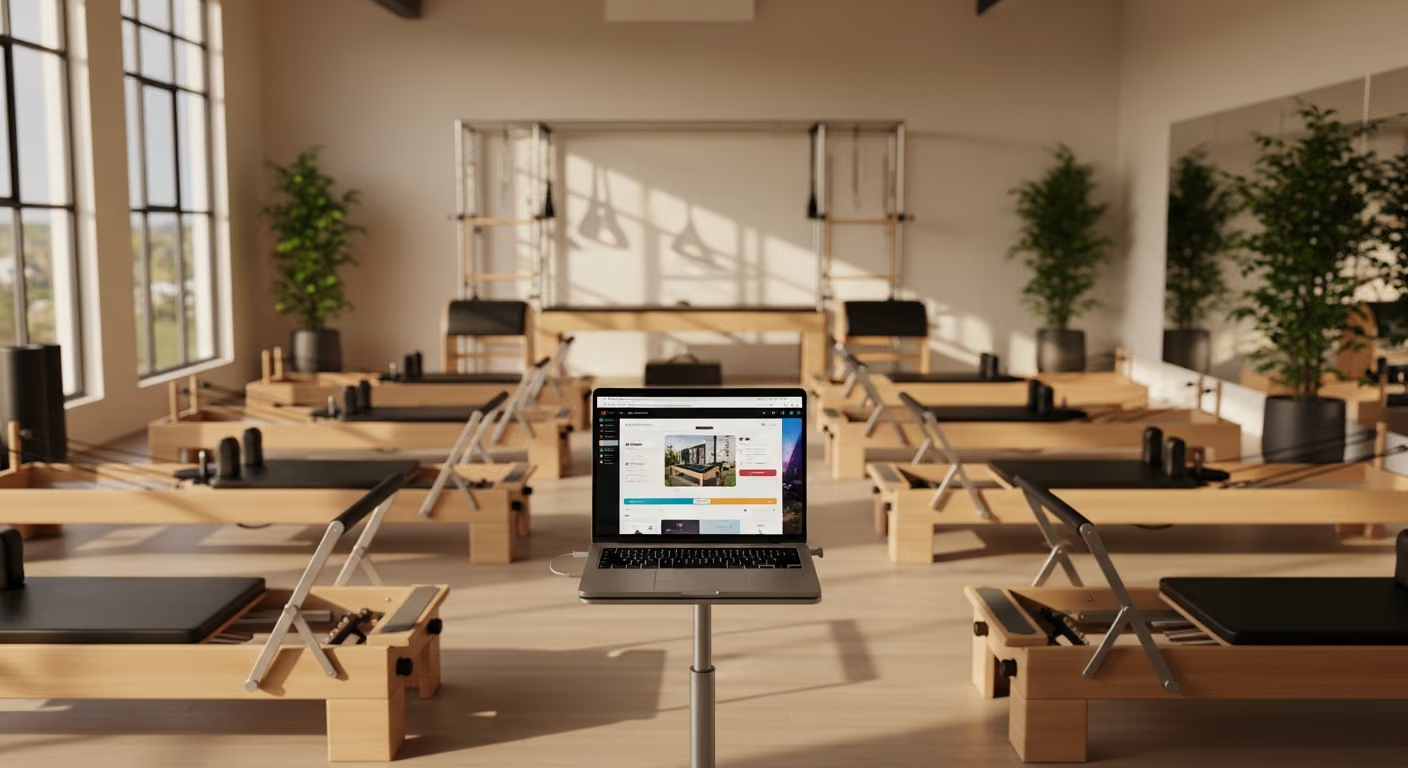
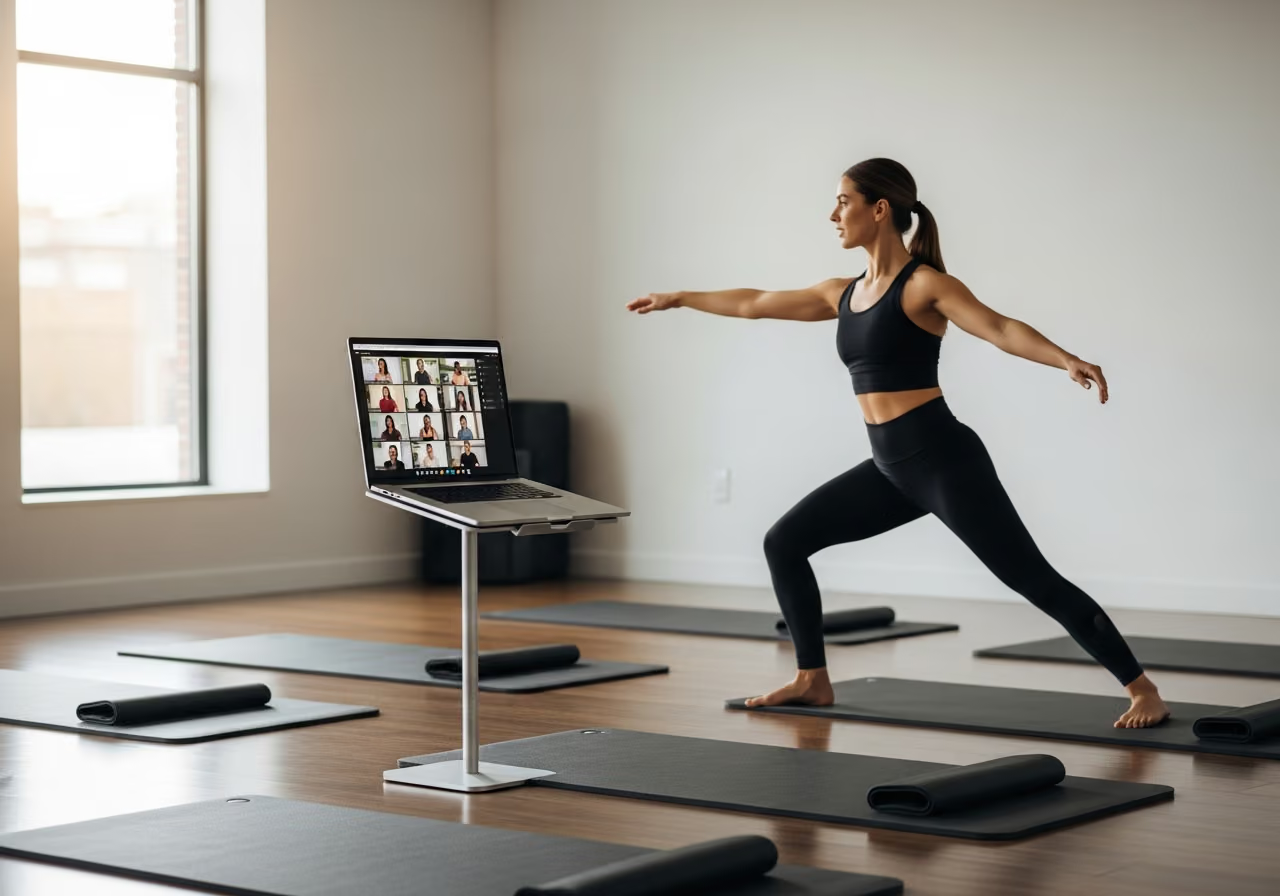
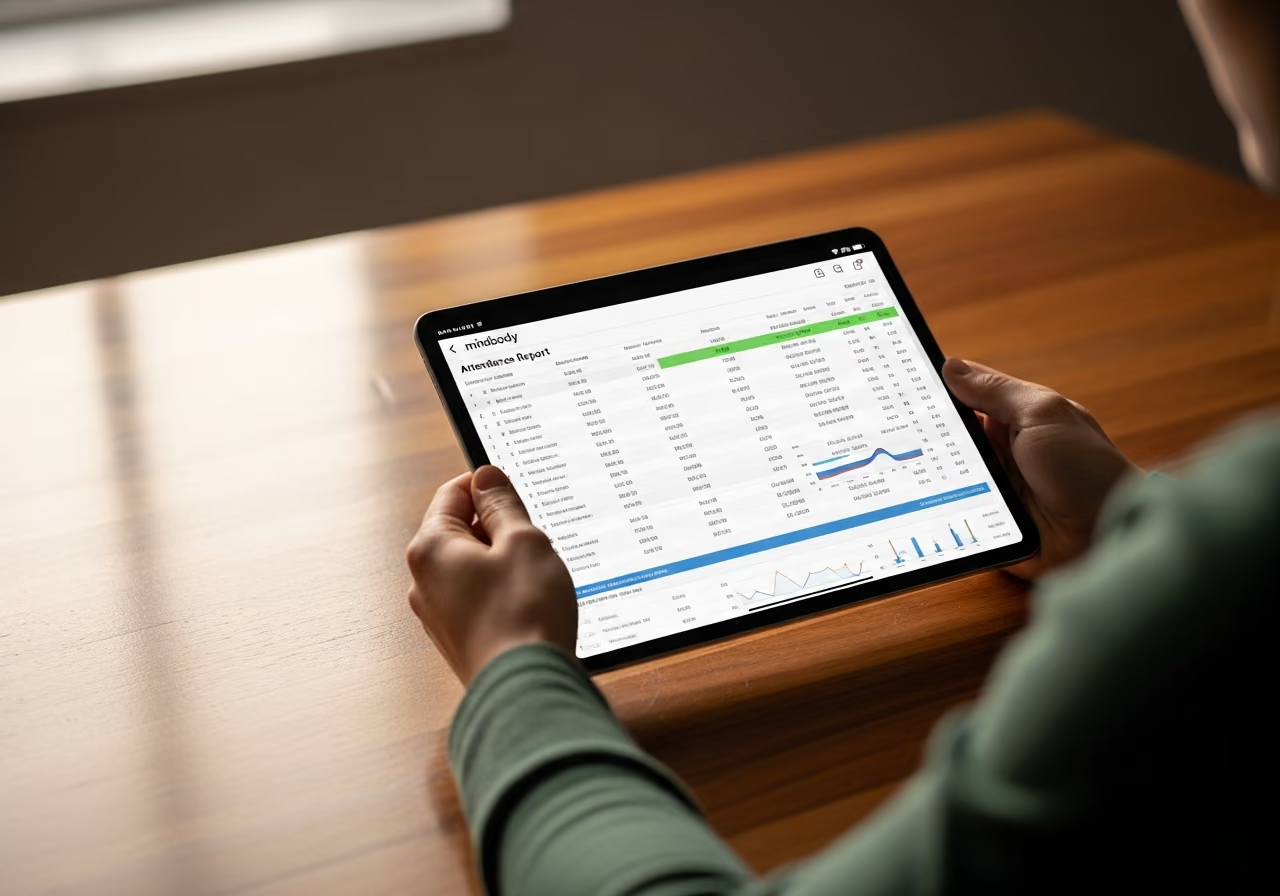
A hybrid pilates studio runs classes that mix in-studio clients with Zoom attendees. The instructor checks in the in-studio clients on the Mindbody iPad. The Zoom attendees show up in the meeting, take the class, and leave, and nobody marks them present in Mindbody. The result: attendance reports are wrong, pack visits never get counted down, and a client who took four virtual classes still shows all ten visits on her pack a month later.
The owner usually finds out at month end, then has to back-fill dozens of attendance records by cross-referencing Zoom logs against Mindbody bookings. That is hours of tedious work, and it means revenue she should already have collected has been sitting uncollected for weeks.
The gap also poisons your marketing. A client who attended four virtual classes but is recorded as having attended zero looks, to your automated emails, like a lapsed member about to churn. So your system fires a win-back campaign at someone who has been showing up faithfully the whole time. She finds it confusing, and members who get irrelevant emails learn to ignore all of them.
What the Attendance Gap Actually Costs
The obvious cost is leaked revenue. Every virtual class that does not decrement a pack is a class the client effectively took for free, and across a month of hybrid classes that adds up to real money.
The less obvious cost is trust, in both directions. Your reports stop reflecting reality, so you cannot make confident decisions about which classes to keep on the schedule. And your members notice when their remaining-visit count does not match what they remember, which turns a simple front-desk check into an awkward negotiation. Bad attendance data is not a tidiness problem. It is a revenue problem and a relationship problem.
How It Works Once Roll Call Runs Itself
ZoomConnect gives every booked client a unique join link tied to their specific Mindbody booking. When a client joins the class, the system knows exactly who it is, because the link identifies them. After class, ZoomConnect marks that client present in Mindbody automatically and counts down their pack. The loop closes itself, every class, with no instructor effort.
Because each link belongs to one person, the system also keeps one client from passing her link to a friend. The link works on one device at a time. If she joins from her phone and someone else tries the same link on a laptop, the second attempt is turned away. Your virtual class revenue stays protected without the instructor having to police it.
Late joiners are handled with a rule you set, not an instructor’s judgment in the moment. A client who joins 12 minutes into a 60-minute class probably still counts as present. Someone who joins for the last 5 minutes probably should not. You set the threshold once, per class type, and it applies consistently to every class.
Cancellations are handled too. If a client cancels shortly before class, her link stops working and a waitlisted client is promoted with her own link. Roll call then matches who actually attended, not who originally booked, which is the source of most reconciliation headaches.
Setting It Up
The setup is short:
- Turn on the unique-link feature in ZoomConnect. By default each link works on one device.
- Run a hybrid class as usual. In-studio clients check in on the iPad. Virtual clients click the link in their reminder email.
- After class, ZoomConnect marks every virtual attendee present in Mindbody and counts down their packs.
- Set the attendance threshold per class type. The default counts a client present if they joined in the first 20 minutes and stayed at least 15. A 30-minute express class might want a tighter rule, a 90-minute workshop a looser one.
- Review the first week’s reports against any manual records you kept, and adjust the threshold if needed.
After that, the month-end report simply matches reality, because it has been matching all along.
A Few Real-World Cases
Dropped connections: a client’s WiFi cuts out and she rejoins from her phone. The system recognizes it as the same person and counts her once, without losing her attendance or double-counting it.
Household co-watching: if two people watch from one paid booking, attendance goes to the paying client. If you want to allow household pairs for a small added fee, that can be configured.
Late cancellations: a cancellation inside your no-cancel window is recorded as a late cancel, not a no-show and not an attendance, so your reports and any late-cancel fees stay accurate.
What the Numbers Could Look Like
Consider an illustrative example: a hypothetical hybrid pilates studio running 22 mixed classes a week, with roughly 40 percent of attendance virtual.
- Virtual attendance captured climbs from around 78 percent to roughly 99 percent.
- Recovered pack revenue, visits that were attended but never counted down, comes to roughly $1,400 in the first month, then holds at zero leakage going forward.
- Owner time on month-end attendance reconciliation drops to zero.
There is a member-experience gain worth naming. Members trust that their visits are counting correctly because the studio’s records match what they remember. The “how many visits do I have left” conversation stops being a negotiation and becomes a simple confirmation. These figures are illustrative, not a real customer’s results.
Why This Matters for Your Bottom Line
- Revenue leaking from packs that never decrement is invisible until you go looking. Most hybrid studios are leaking and do not know how much.
- One device per link is not about punishing members. It is the baseline for protecting the revenue your virtual classes are supposed to bring in.
- Accurate attendance data feeds accurate marketing. When your records reflect reality, your win-back emails reach the right people and your members keep trusting your messages.
Try It
Curious how this works for your hybrid classes? View the API App page.
Keep reading

The Gap Between "I Paid" and "I'm Booked"
A customer buys a class pack on Shopify, then can't figure out how to book it. Here's how a Mindbody booking widget and ShopConnect close that gap for good.

Mindbody and HighLevel: One Clear Schedule Per Student Across Every Program
If your studio runs beginner programs, longer courses, and private lessons at once, here is how your reminders finally match what each student actually has booked.

Mindbody and Klaviyo: Per-Location Marketing for a 6-Gym Strength Network
A central marketing team sending one blast to every member of a 6-gym network gets the coach name and the gym address wrong half the time.